Immediate Skin-to-Skin After C-Section: C-sectionUK Research Results
42% of the 1268 women who responded to C-sectionUK’s survey told us they did not have immediate skin to skin with their babies at C-section birth, despite immediate skin-to-skin being recommended by the World Health Organisation and the UNICEF UK Baby Friendly Initiative. Keep reading for our reflection on the results.
Our monthly research initiative for C-section parents
Each month, C-sectionUK is asking our committed community of over 50,000 women about their experiences, in response to research often focusing on generalised birth experience or vaginal birth experience. Together, with the women in our C-sectionUK community, we’re committing in 2026 to researching key areas of this journey to understand what is happening in real terms for women.
We’re shining a light on the areas that are in need of improvement, and we’re hopeful that our professional colleagues in the birth space will benefit from these conversations to guide their teaching and policy development and care.
Each month on our C-sectionUK Instagram page we post a poll with a C-section birth research topic. Each poll has a yes/no answer format, which offers a clear definitive percentage for each answer.
Poll Results
1268 women responded to our poll via a yes/no format to the following question: “Did you have immediate skin-to-skin in theatre after your C-section birth?”
▶ 42% answered No
▶ 58% answered Yes
We received 78 comments from women in addition to the votes in our poll. Varying reasons were given for not receiving skin-to-skin contact with their babies immediately at birth, but the overall theme was that of confusion, with some women not understanding why it did not happen or why there was a delay. The overwhelming description of events from women who did not receive immediate skin-to-skin was that their baby was taken to be weighed, wiped and checked before being returned to them.
Additional reasons provided for not receiving skin-to-skin contact included: Baby required resuscitation, Baby moved to NICU.
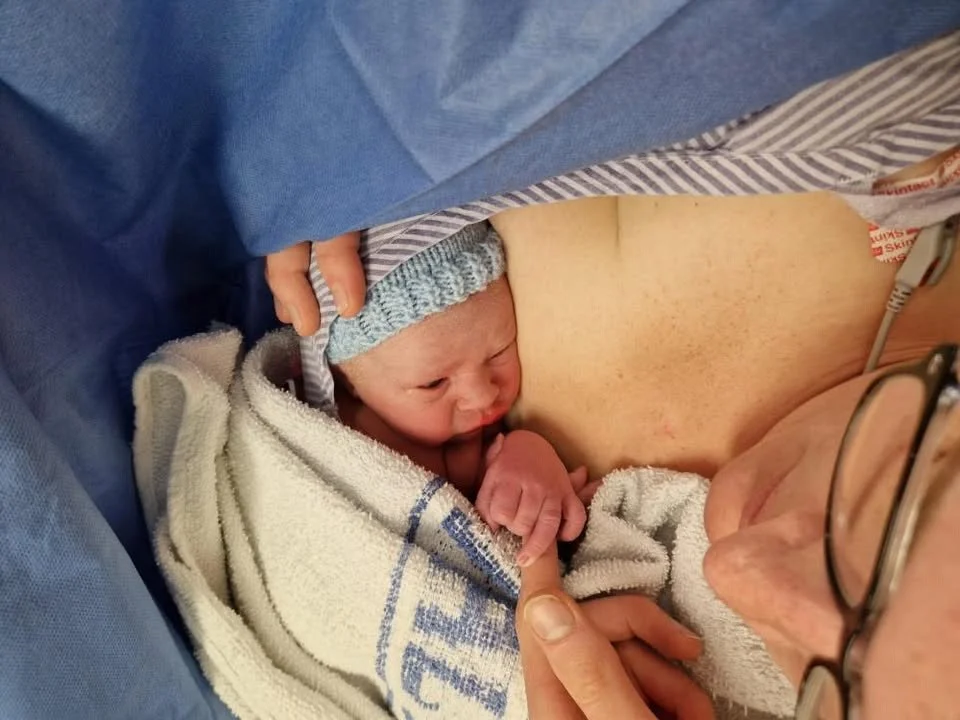
So what does the research say?
The National Institute for Health and Care Excellence (NICE) guidance highlights the importance of skin-to-skin contact immediately after birth, highlighting that routine care such as weighing should not interrupt this incredibly important aspect of the birth process. In addition to NICE, reputable leading platforms such as the World Health Organisation (WHO) and the United Nations International Children's Emergency Fund recommends that mothers and newborns have skin-to-skin contact immediately after a vaginal birth, and as soon as the mother is alert and responsive after a Caesarean section.
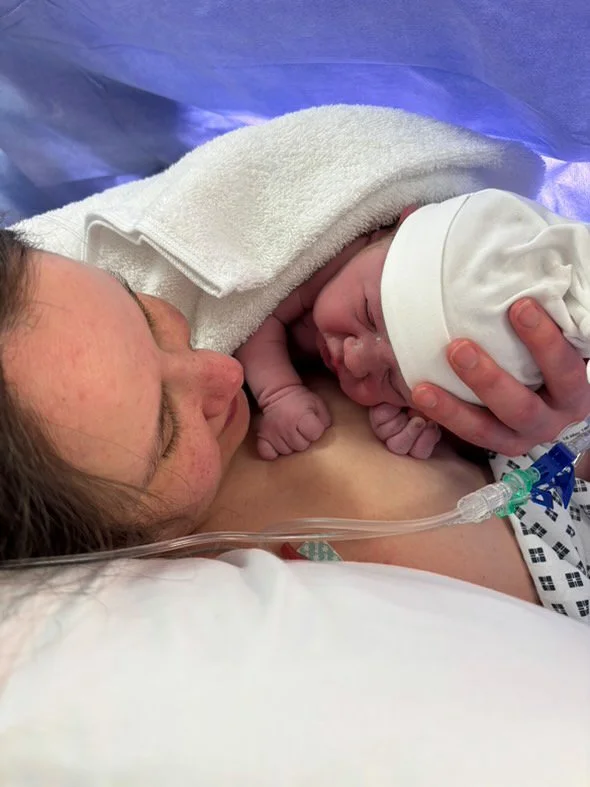
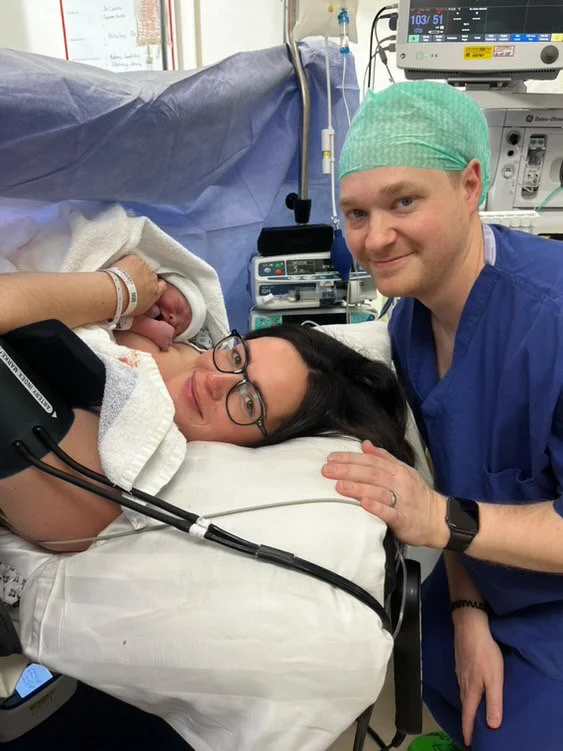
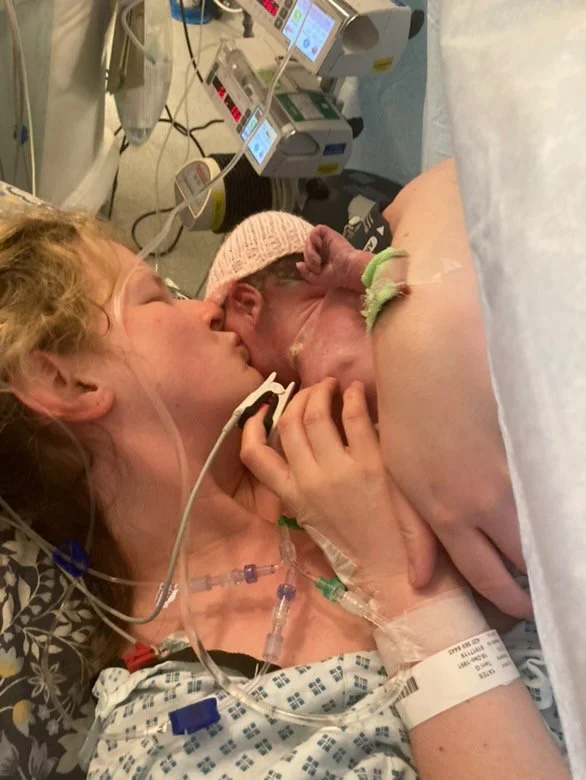
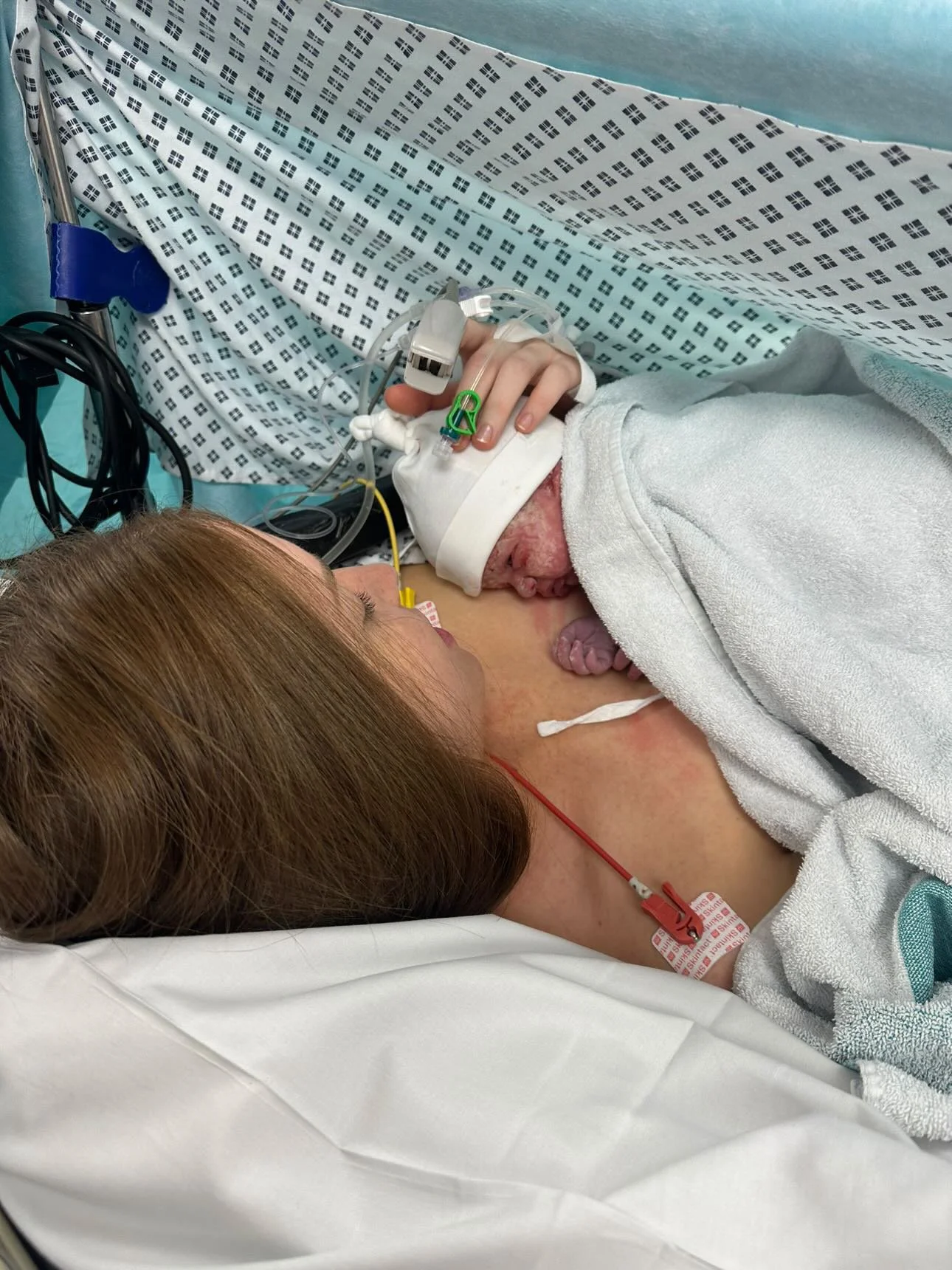
Skin-to-skin is defined as placing a naked infant onto the bare chest of the mother. It’s been known to regulate baby’s heart rates, breathing rates, temperature, and importantly supports lactation. C-section birth statistically has been known to reduce breastfeeding initiation with delay of the onset of lactation.
With this knowledge, alongside these key recommendations from reputable platforms, the importance of skin-to-skin contact is further highlighted. This simple measure can change the outcomes for infants, with significant long-term positive consequences, as well as the mother’s lactation and birth experience.
This article does not have capacity to explore the intricacies of why so many women are still facing failures in support for skin-to-skin, but what it does highlight is that this is a very real problem still being experienced by many in 2026. This data should act as a spring board into the key conversations around advocacy and care for women birthing via C-section.
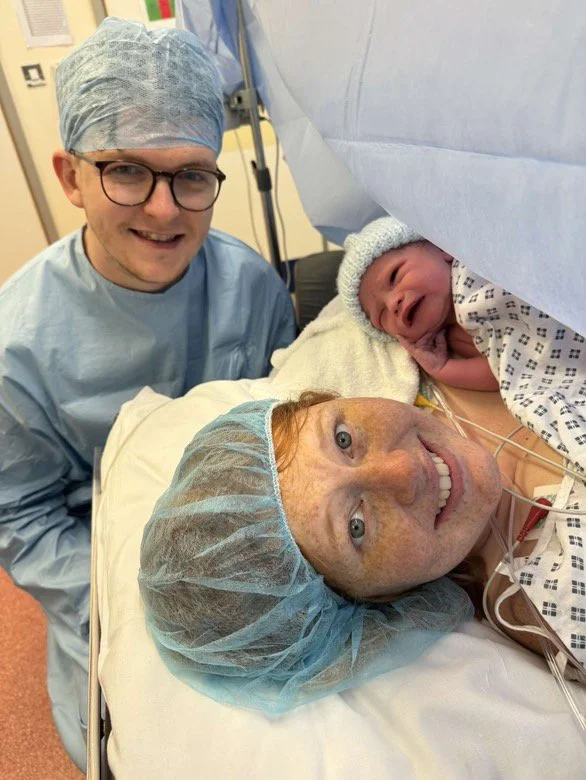
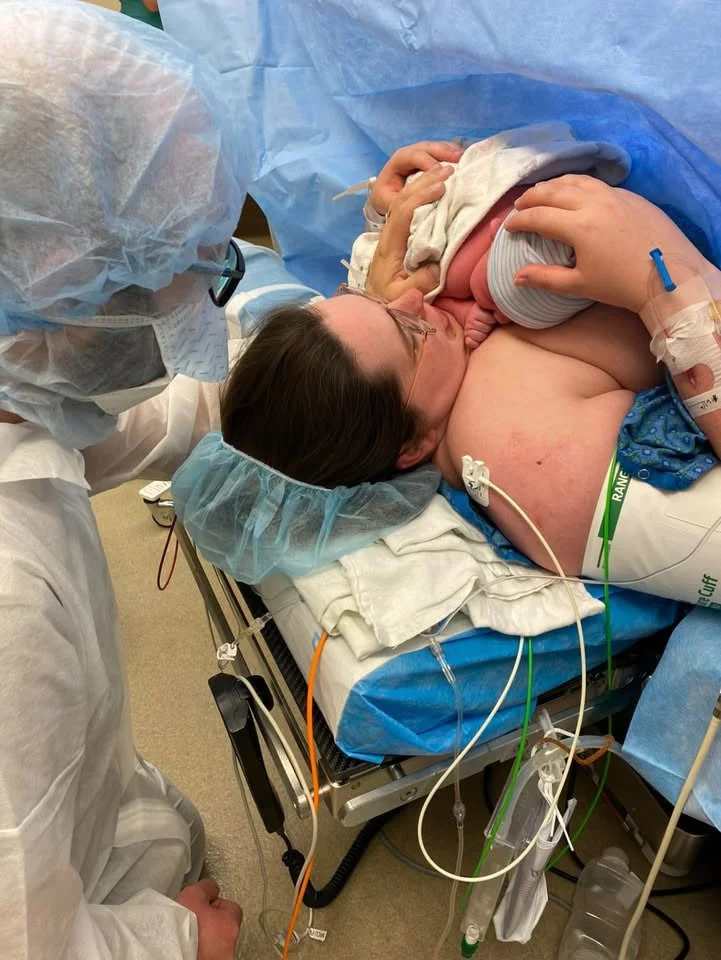
CSUK Community Voices
Here’s what some of our C-sectionUK community had to say.
User @02.allysha.rubio.14
No and it broke me :(( It made me really hurt to know I didn’t get skin to skin and then he was taken to nursery for 2 days to be treated for infection
User @carlzie05
No it was on my birth plan, immediate skin to skin regardless of labour. Baby was totally fine after c-section but wasn't given it. Didn’t get it until hours after, was quite angry that nothing was discussed.
User @jasminloakman
I didn’t and I was absolutely broken when I realise what had happened a few days later whilst looking at the photographs my husband had taken in the operating theatre - my daughter was quickly shown to me in her towel after weighing then sat with her Dad. I’d asked in all pre-appointments for my planned c-section (for breech presentation) and was told that immediate skin to skin was ‘normal procedure’. It’s still something that haunts me to this day, that I was so overwhelmed by what was happening in the theatre room, I didn’t speak up for myself.
Conclusion
Our findings this month show that immediate skin to skin at C-section birth is still something we need to loudly advocate for. Whether you’re preparing for your C-section or navigating recovery, it’s clear that women need to be listened to more. Whether that’s to advocate for their birth or to debrief and be supported in the postpartum period. We need to listen to women more. These are not ‘nice to haves’, they are vital and integral wishes for a mother’s baby and their birth - a time they will never get back again.
Next month (March)’s poll:
Next month we will be posting our second research poll in this series and we would love for our community to vote and share their experience with us to help shape our articles. March’s research poll will cover the question: “Were you asked about your plan/preferences for your C-section?”
Have your say in next month’s poll! Head over to our Instagram or Facebook and let us know your thoughts on our research polls.
Your voice counts and helps other parents feel supported.
Every C-section voice matters.